
Pima Community College Course Catalog 2015
Pima Community College Course Catalog 2015 - We often overlook these humble tools, seeing them as mere organizational aids. Understanding the deep-seated psychological reasons a simple chart works so well opens the door to exploring its incredible versatility. Customers began uploading their own photos in their reviews, showing the product not in a sterile photo studio, but in their own messy, authentic lives. Experiment with different materials and techniques to create abstract compositions. A professional might use a digital tool for team-wide project tracking but rely on a printable Gantt chart for their personal daily focus. Beyond the speed of initial comprehension, the use of a printable chart significantly enhances memory retention through a cognitive phenomenon known as the "picture superiority effect. It can create a false sense of urgency with messages like "Only 2 left in stock!" or "15 other people are looking at this item right now!" The personalized catalog is not a neutral servant; it is an active and sophisticated agent of persuasion, armed with an intimate knowledge of your personal psychology. Position the wheel so that your hands can comfortably rest on it in the '9 and 3' position with your arms slightly bent. These were, in essence, physical templates. You can find printable coloring books on virtually any theme. This vehicle is a testament to our commitment to forward-thinking design, exceptional safety, and an exhilarating driving experience. He was the first to systematically use a line on a Cartesian grid to show economic data over time, allowing a reader to see the narrative of a nation's imports and exports at a single glance. A truly consumer-centric cost catalog would feature a "repairability score" for every item, listing its expected lifespan and providing clear information on the availability and cost of spare parts. He understood, with revolutionary clarity, that the slope of a line could instantly convey a rate of change and that the relative heights of bars could make quantitative comparisons immediately obvious to the eye. The remarkable efficacy of a printable chart begins with a core principle of human cognition known as the Picture Superiority Effect. Keeping an inspiration journal or mood board can help you collect ideas and references. The power of a template is its ability to provide a scaffold, liberating us from the need to reinvent the wheel with every new project. Your vehicle is equipped with an electronic parking brake, operated by a switch on the center console. Listen for any unusual noises and feel for any pulsations. The grid is the template's skeleton, the invisible architecture that brings coherence and harmony to a page. People display these quotes in their homes and offices for motivation. Of course, embracing constraints and having a well-stocked mind is only part of the equation. One of the first and simplest methods we learned was mind mapping. The freedom from having to worry about the basics allows for the freedom to innovate where it truly matters. The phenomenon demonstrates a powerful decentralizing force, allowing individual creators to distribute their work globally and enabling users to become producers in their own homes. But this also comes with risks. Alternatively, it may open a "Save As" dialog box, prompting you to choose a specific location on your computer to save the file. This includes using recycled paper, soy-based inks, and energy-efficient printing processes. For any student of drawing or painting, this is one of the first and most fundamental exercises they undertake. From enhancing business operations to simplifying personal projects, online templates have become indispensable tools. It is an artifact that sits at the nexus of commerce, culture, and cognition. 98 The "friction" of having to manually write and rewrite tasks on a physical chart is a cognitive feature, not a bug; it forces a moment of deliberate reflection and prioritization that is often bypassed in the frictionless digital world. A significant portion of our brain is dedicated to processing visual information. Drawing, a timeless form of visual art, serves as a gateway to boundless creativity and expression. One of the first and simplest methods we learned was mind mapping. The journey from that naive acceptance to a deeper understanding of the chart as a complex, powerful, and profoundly human invention has been a long and intricate one, a process of deconstruction and discovery that has revealed this simple object to be a piece of cognitive technology, a historical artifact, a rhetorical weapon, a canvas for art, and a battleground for truth. Creativity thrives under constraints. This brings us to the future, a future where the very concept of the online catalog is likely to transform once again. By planning your workout in advance on the chart, you eliminate the mental guesswork and can focus entirely on your performance. How does a user "move through" the information architecture? What is the "emotional lighting" of the user interface? Is it bright and open, or is it focused and intimate? Cognitive psychology has been a complete treasure trove. Your Toyota Ascentia is equipped with a tilting and telescoping steering column, which you can adjust by releasing the lock lever located beneath it. A professional, however, learns to decouple their sense of self-worth from their work. It acts as an external memory aid, offloading the burden of recollection and allowing our brains to focus on the higher-order task of analysis. It is an attempt to give form to the formless, to create a tangible guidepost for decisions that are otherwise governed by the often murky and inconsistent currents of intuition and feeling. These are wild, exciting chart ideas that are pushing the boundaries of the field. The foundation of most charts we see today is the Cartesian coordinate system, a conceptual grid of x and y axes that was itself a revolutionary idea, a way of mapping number to space. This renewed appreciation for the human touch suggests that the future of the online catalog is not a battle between human and algorithm, but a synthesis of the two. We are drawn to symmetry, captivated by color, and comforted by texture. If the catalog is only ever showing us things it already knows we will like, does it limit our ability to discover something genuinely new and unexpected? We risk being trapped in a self-reinforcing loop of our own tastes, our world of choice paradoxically shrinking as the algorithm gets better at predicting what we want. It does not require a charged battery, an internet connection, or a software subscription to be accessed once it has been printed. In the rare event that your planter is not connecting to the Aura Grow app, make sure that your smartphone or tablet’s Bluetooth is enabled and that you are within range of the planter. This is incredibly empowering, as it allows for a much deeper and more personalized engagement with the data. The interior of your vehicle also requires regular attention. When I came to design school, I carried this prejudice with me. There’s a wonderful book by Austin Kleon called "Steal Like an Artist," which argues that no idea is truly original. These methods felt a bit mechanical and silly at first, but I've come to appreciate them as tools for deliberately breaking a creative block. Is this idea really solving the core problem, or is it just a cool visual that I'm attached to? Is it feasible to build with the available time and resources? Is it appropriate for the target audience? You have to be willing to be your own harshest critic and, more importantly, you have to be willing to kill your darlings. Softer pencils (B range) create darker marks, ideal for shading, while harder pencils (H range) are better for fine lines and details. The printable template is the key that unlocks this fluid and effective cycle. When the story is about composition—how a whole is divided into its constituent parts—the pie chart often comes to mind. The print catalog was a one-to-many medium. From the bold lines of charcoal sketches to the delicate shading of pencil portraits, black and white drawing offers artists a versatile and expressive medium to convey emotion, atmosphere, and narrative. 37 The reward is no longer a sticker but the internal satisfaction derived from seeing a visually unbroken chain of success, which reinforces a positive self-identity—"I am the kind of person who exercises daily. Suddenly, the catalog could be interrogated. This is followed by a period of synthesis and ideation, where insights from the research are translated into a wide array of potential solutions. Its core genius was its ability to sell not just a piece of furniture, but an entire, achievable vision of a modern home. I had decorated the data, not communicated it. How do you design a catalog for a voice-based interface? You can't show a grid of twenty products. They established a foundational principle that all charts follow: the encoding of data into visual attributes, where position on a two-dimensional surface corresponds to a position in the real or conceptual world. 76 The primary goal of good chart design is to minimize this extraneous load. From there, you might move to wireframes to work out the structure and flow, and then to prototypes to test the interaction. The printable chart is not an outdated relic but a timeless strategy for gaining clarity, focus, and control in a complex world. And then, a new and powerful form of visual information emerged, one that the print catalog could never have dreamed of: user-generated content. One of the most frustrating but necessary parts of the idea generation process is learning to trust in the power of incubation. Stay open to new techniques, styles, and ideas. New niches and product types will emerge. 23 This visual evidence of progress enhances commitment and focus. It solves an immediate problem with a simple download. Its value is not in what it contains, but in the empty spaces it provides, the guiding lines it offers, and the logical structure it imposes. The low price tag on a piece of clothing is often a direct result of poverty-level wages, unsafe working conditions, and the suppression of workers' rights in a distant factory.
Precalculus II Course Syllabus Pima Community College

Work for Pima Community College on Behance

The College Pima Community College Modern Campus Catalog™

Pima Community College Pima Community College, Tucson, Arizona

Pima Community College Pima Community College, Tucson, Arizona

Pima Community College Pima Community College, Tucson, Arizona

About Us Workforce & Continuing Ed, Pima Community College

Pima Community College D2L

Fillable Online Course Descriptions Pima Community College Acalog

Pima Community College Pima Community College, Tucson, Arizona

PCC Selects Explorance Blue to Improve Course Evaluations Explorance

Pima Community College

Academics & Programs Pima Community College, Tucson, Arizona

Pima Community College Pima Community College, Tucson, Arizona
2009 Pima County Community College District report on internal control
Pima Community College Human Resources Tucson AZ

Pima Community College Pima Community College, Tucson, Arizona

College Course Catalogs

Pima Community College DLR Group

Course Descriptions Pima Community College Modern Campus Catalog™

Pima Community College Pima Community College, Tucson, Arizona

Resource Library

Pima Community College (Phoenix, Arizona, USA)

Calculus II Honors Syllabus Pima Community College

Pima Community College Pima Community College, Tucson, Arizona

Your Voice, Our Future Pima Community College’s 2025 Futures
CCC Publications Schedules, Course Catalogs, and More

Pima Community College

Pima Community College Northwest Campus

College Catalog Cover Design 2 Pima Community College
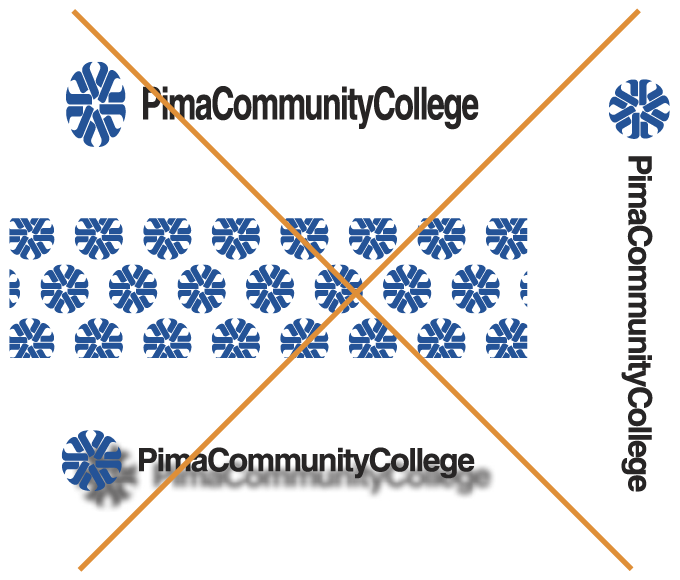
Pima Logo Guide Pima Community College, Tucson, Arizona

Pima Community College SCA 201510261500 by

Eligible Programs & Courses Pima Community College, Tucson, Arizona

Calculus II Course Syllabus Pima Community College

Pima Community College Pima Community College, Tucson, Arizona
Related Post: