
Maritime History Archive Public Photo Catalog
Maritime History Archive Public Photo Catalog - Safety is the utmost priority when undertaking any electronic repair. It has become the dominant organizational paradigm for almost all large collections of digital content. This do-it-yourself approach resonates with people who enjoy crafting. Self-help books and online resources also offer guided journaling exercises that individuals can use independently. The vehicle is fitted with a comprehensive airbag system, including front, side, and curtain airbags, which deploy in the event of a significant impact. The object itself is unremarkable, almost disposable. Patterns also offer a sense of predictability and familiarity. The craft community also embraces printable technology. They see the project through to completion, ensuring that the final, implemented product is a faithful and high-quality execution of the design vision. But this also comes with risks. This is followed by a period of synthesis and ideation, where insights from the research are translated into a wide array of potential solutions. There are no shipping logistics to handle. They feature editorial sections, gift guides curated by real people, and blog posts that tell the stories behind the products. To achieve this seamless interaction, design employs a rich and complex language of communication. A more specialized tool for comparing multivariate profiles is the radar chart, also known as a spider or star chart. For exploring the relationship between two different variables, the scatter plot is the indispensable tool of the scientist and the statistician. We started with the logo, which I had always assumed was the pinnacle of a branding project. It is a masterpiece of information density and narrative power, a chart that functions as history, as data analysis, and as a profound anti-war statement. This journey is the core of the printable’s power. The arrangement of elements on a page creates a visual hierarchy, guiding the reader’s eye from the most important information to the least. Enhancing Composition and Design In contemporary times, journaling has been extensively studied for its psychological benefits. The t-shirt design looked like it belonged to a heavy metal band. This catalog sample is unique in that it is not selling a finished product. What are their goals? What are their pain points? What does a typical day look like for them? Designing for this persona, instead of for yourself, ensures that the solution is relevant and effective. This introduced a new level of complexity to the template's underlying architecture, with the rise of fluid grids, flexible images, and media queries. It’s about using your creative skills to achieve an external objective. At its core, a printable chart is a visual tool designed to convey information in an organized and easily understandable way. Observation is a critical skill for artists. It offers a quiet, focused space away from the constant noise of digital distractions, allowing for the deep, mindful work that is so often necessary for meaningful progress. One person had put it in a box, another had tilted it, another had filled it with a photographic texture. The designed world is the world we have collectively chosen to build for ourselves. That figure is not an arbitrary invention; it is itself a complex story, an economic artifact that represents the culmination of a long and intricate chain of activities. However, the organizational value chart is also fraught with peril and is often the subject of deep cynicism. This digital medium has also radically democratized the tools of creation. A scientist could listen to the rhythm of a dataset to detect anomalies, or a blind person could feel the shape of a statistical distribution. S. The same is true for a music service like Spotify. Combine unrelated objects or create impossible scenes to explore surrealism. It is a discipline that operates at every scale of human experience, from the intimate ergonomics of a toothbrush handle to the complex systems of a global logistics network. The fields of data sonification, which translates data into sound, and data physicalization, which represents data as tangible objects, are exploring ways to engage our other senses in the process of understanding information. Seeing one for the first time was another one of those "whoa" moments. The true cost becomes apparent when you consider the high price of proprietary ink cartridges and the fact that it is often cheaper and easier to buy a whole new printer than to repair the old one when it inevitably breaks. This system, this unwritten but universally understood template, was what allowed them to produce hundreds of pages of dense, complex information with such remarkable consistency, year after year. " We can use social media platforms, search engines, and a vast array of online tools without paying any money. With your Aura Smart Planter assembled and connected, you are now ready to begin planting. This digital original possesses a quality of perfect, infinite reproducibility. A simple search on a platform like Pinterest or a targeted blog search unleashes a visual cascade of options. As individuals gain confidence using a chart for simple organizational tasks, they often discover that the same principles can be applied to more complex and introspective goals, making the printable chart a scalable tool for self-mastery. The template had built-in object styles for things like image frames (defining their stroke, their corner effects, their text wrap) and a pre-loaded palette of brand color swatches. This internal blueprint can become particularly potent when forged by trauma. The rise of social media and online communities has played a significant role in this revival. As they gain confidence and experience, they can progress to more complex patterns and garments, exploring the vast array of textures, colors, and designs that knitting offers. A river carves a canyon, a tree reaches for the sun, a crystal forms in the deep earth—these are processes, not projects. They are deeply rooted in the very architecture of the human brain, tapping into fundamental principles of psychology, cognition, and motivation. It presents a pre-computed answer, transforming a mathematical problem into a simple act of finding and reading. Think before you act, work slowly and deliberately, and if you ever feel unsure or unsafe, stop what you are doing. The goal is to find out where it’s broken, where it’s confusing, and where it’s failing to meet their needs. The simple printable chart is thus a psychological chameleon, adapting its function to meet the user's most pressing need: providing external motivation, reducing anxiety, fostering self-accountability, or enabling shared understanding. The final posters were, to my surprise, the strongest work I had ever produced. This well-documented phenomenon reveals that people remember information presented in pictorial form far more effectively than information presented as text alone. No repair is worth an injury. It is the catalog as a form of art direction, a sample of a carefully constructed dream. Water and electricity are a dangerous combination, so it is crucial to ensure that the exterior of the planter and the area around the power adapter are always dry. 11 This is further strengthened by the "generation effect," a principle stating that we remember information we create ourselves far better than information we passively consume. The profound effectiveness of the comparison chart is rooted in the architecture of the human brain itself. We urge you to read this document thoroughly. This corner of the printable world operates as a true gift economy, where the reward is not financial but comes from a sense of contribution, community recognition, and the satisfaction of providing a useful tool to someone who needs it. The most literal and foundational incarnation of this concept is the artist's value chart. Thus, a truly useful chart will often provide conversions from volume to weight for specific ingredients, acknowledging that a cup of flour weighs approximately 120 grams, while a cup of granulated sugar weighs closer to 200 grams. 18 A printable chart is a perfect mechanism for creating and sustaining a positive dopamine feedback loop. It is the catalog as a form of art direction, a sample of a carefully constructed dream. " Her charts were not merely statistical observations; they were a form of data-driven moral outrage, designed to shock the British government into action. When replacing a component like a servo drive, it is critical to first back up all parameters from the old drive using the control interface, if possible. Studying the Swiss Modernist movement of the mid-20th century, with its obsession with grid systems, clean sans-serif typography, and objective communication, felt incredibly relevant to the UI design work I was doing. A professional doesn’t guess what these users need; they do the work to find out. A good designer understands these principles, either explicitly or intuitively, and uses them to construct a graphic that works with the natural tendencies of our brain, not against them. Are we willing to pay a higher price to ensure that the person who made our product was treated with dignity and fairness? This raises uncomfortable questions about our own complicity in systems of exploitation. It was also in this era that the chart proved itself to be a powerful tool for social reform. The interaction must be conversational. For the optimization of operational workflows, the flowchart stands as an essential type of printable chart.
Schooner "Henry Ford"
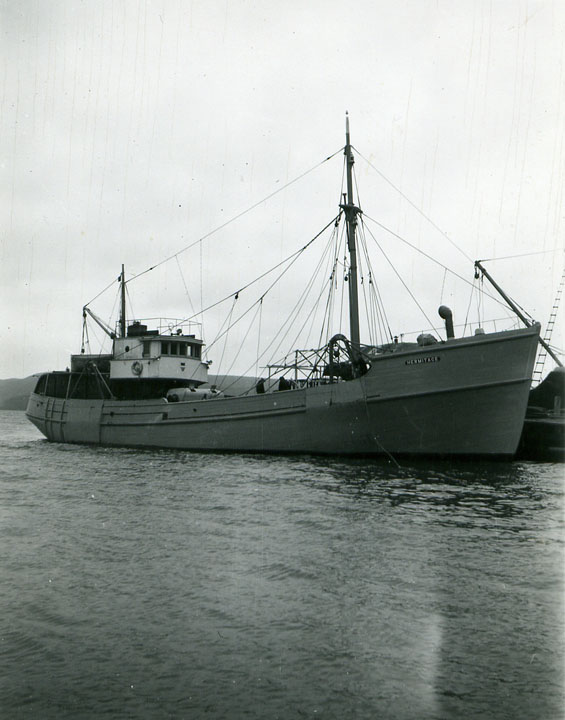
The fishing vessel "Hermitage"

Schooner "Swile"
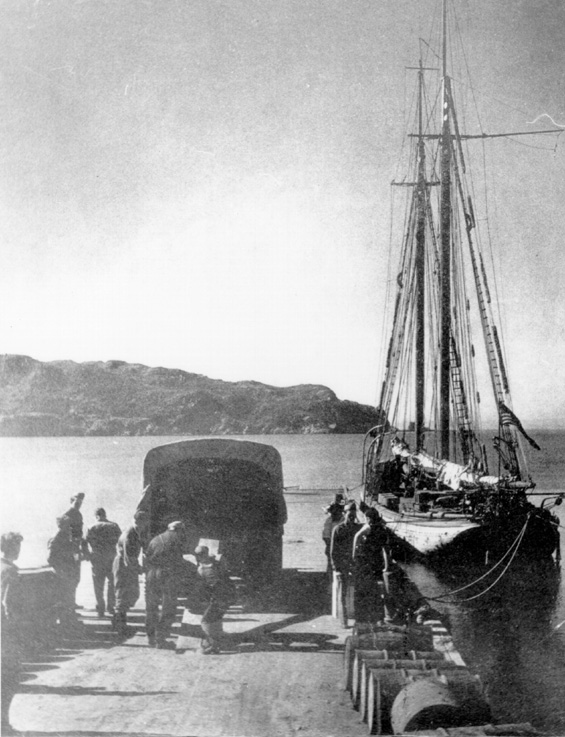
"The Effie M. Morrissey, 125foot schooner of Captain Bob Bartlett

"Shelayates" (Schooner)

Vessel "Young Hood"

"Equator"

Portuguese fishing vessel "Creoula" and other vessels in the White

"Reta and Blanche H." (Schooner) under sail

"Lydia Cardell" in a foreign port

Schooner and other boats anchored at Cottels Island, Bonavista Bay

"Shirley C." (Schooner)

The ship "I. Sardegna", approaching land
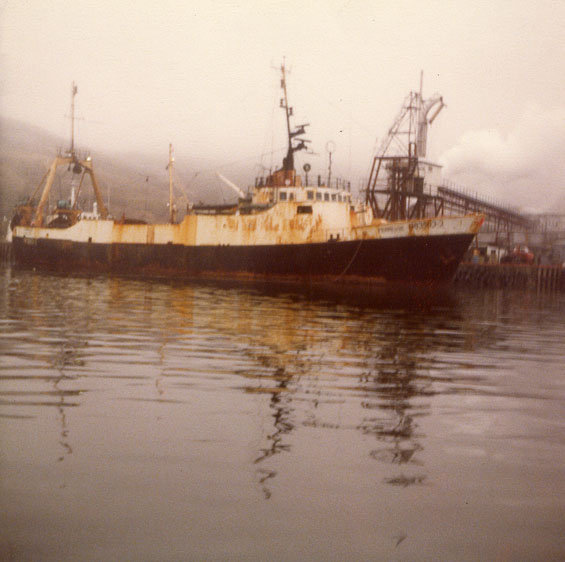
The stern trawler "Fermeuse"

"Mary B. Mitchell"

"Harold Guy"

"Mabel Dorothy"

"Mary Miller"

Launching the "Philip E. Lake", Clarenville, Newfoundland

"Marguerite B. Tanner(?)" (Schooner) at sea

"Caroline Rose"

Vessel "Young Hood"

M.V. "Nina Bowater" docked at Bowater's in Corner Brook, Newfoundland

"John Llewelyn"

"Frau Minna Petersen"

Sailboat, likely in Conception Bay, Newfoundland

"9 at Halifax"

Dories and gear on the deck of a three masted schooner, St. John's
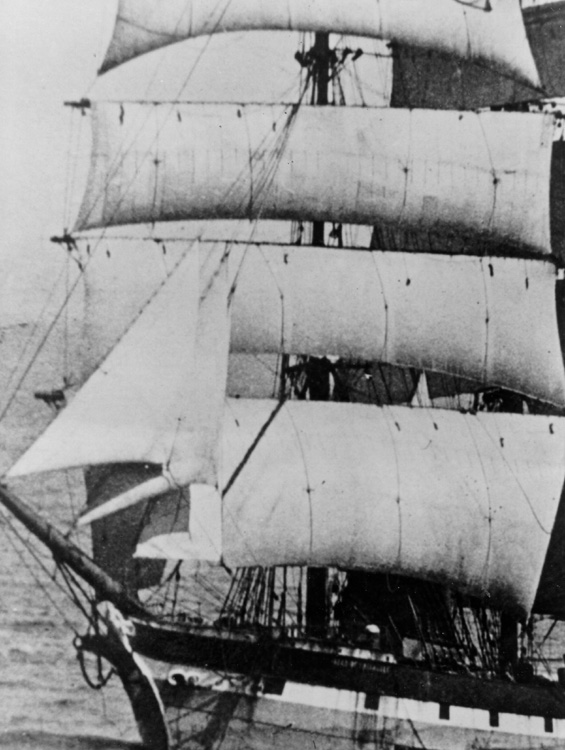
Falls of Halladale (Ship) in full sail

M.V. "William Carson", from the deck of the S.S. "Bar Haven", Port aux

Lifeboat on the "Ocean Ranger"

"Sandra L. Gage" (Trawler) and "Grand Monarch" (Trawler) docked
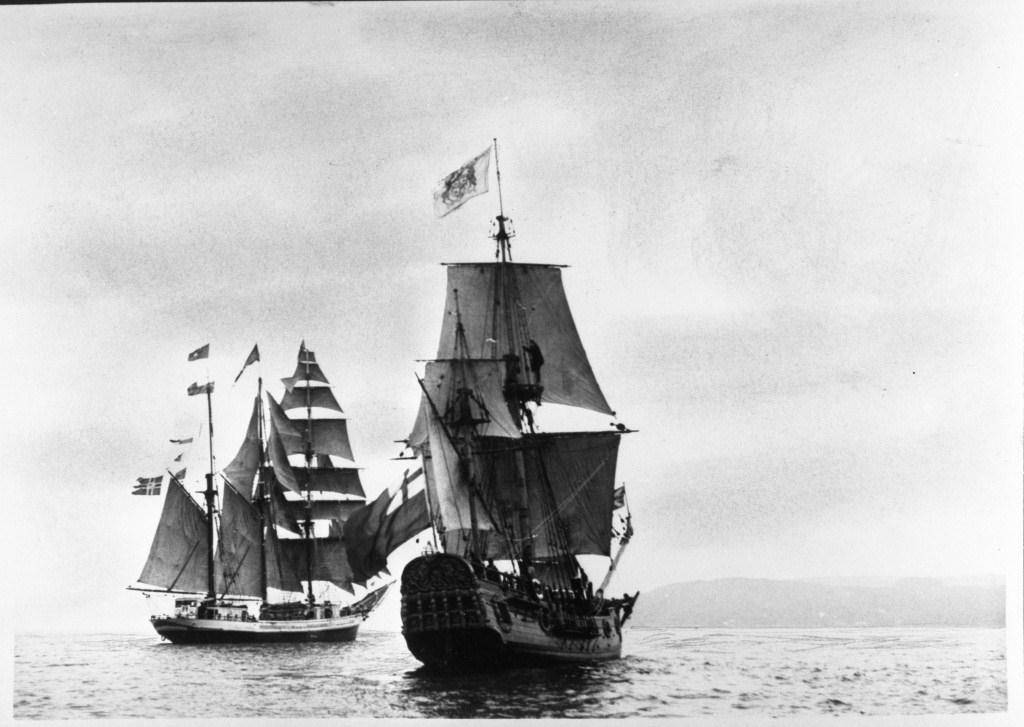
Maritime History History Archive The Poly at Falmouth
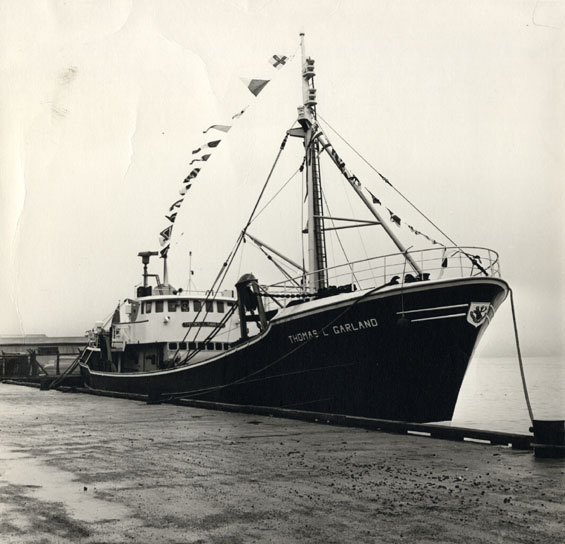
The fishing vessel "Thomas L. Garland" docked at a waterfront

Schooner "Philip E. Lake", Clarenville, Newfoundland
Related Post: