
Db2 List Catalog
Db2 List Catalog - 21 In the context of Business Process Management (BPM), creating a flowchart of a current-state process is the critical first step toward improvement, as it establishes a common, visual understanding among all stakeholders. The first real breakthrough in my understanding was the realization that data visualization is a language. Standing up and presenting your half-formed, vulnerable work to a room of your peers and professors is terrifying. The feedback I received during the critique was polite but brutal. At this moment, the printable template becomes a tangible workspace. This has led to the now-common and deeply uncanny experience of seeing an advertisement on a social media site for a product you were just looking at on a different website, or even, in some unnerving cases, something you were just talking about. The catalog becomes a fluid, contextual, and multi-sensory service, a layer of information and possibility that is seamlessly integrated into our lives. Templates for newsletters and social media posts facilitate consistent and effective communication with supporters and stakeholders. We have also uncovered the principles of effective and ethical chart design, understanding that clarity, simplicity, and honesty are paramount. The only tools available were visual and textual. Neurological studies show that handwriting activates a much broader network of brain regions, simultaneously involving motor control, sensory perception, and higher-order cognitive functions. These documents are the visible tip of an iceberg of strategic thinking. This is the danger of using the template as a destination rather than a starting point. Moreover, drawing is a journey of self-discovery and growth. It is a guide, not a prescription. This communicative function extends far beyond the printed page. The oil level should be between the minimum and maximum marks on the dipstick. These are the subjects of our inquiry—the candidates, the products, the strategies, the theories. It is a network of intersecting horizontal and vertical lines that governs the placement and alignment of every single element, from a headline to a photograph to the tiniest caption. The tools we use also have a profound, and often subtle, influence on the kinds of ideas we can have. A certain "template aesthetic" emerges, a look that is professional and clean but also generic and lacking in any real personality or point of view. 8 This is because our brains are fundamentally wired for visual processing. This could be incredibly valuable for accessibility, or for monitoring complex, real-time data streams. It demonstrates a mature understanding that the journey is more important than the destination. It has been designed to be as user-friendly as possible, providing multiple ways to locate your manual. It uses evocative, sensory language to describe the flavor and texture of the fruit. Whether through sketches, illustrations, or portraits, artists harness the power of drawing to evoke feelings, provoke thoughts, and inspire contemplation. Imagine a single, preserved page from a Sears, Roebuck & Co. How do you design a catalog for a voice-based interface? You can't show a grid of twenty products. For example, the check engine light, oil pressure warning light, or brake system warning light require your immediate attention. The gear selector is a rotary dial located in the center console. This is the ultimate evolution of the template, from a rigid grid on a printed page to a fluid, personalized, and invisible system that shapes our digital lives in ways we are only just beginning to understand. A simple video could demonstrate a product's features in a way that static photos never could. If possible, move the vehicle to a safe location. The flowchart, another specialized form, charts a process or workflow, its boxes and arrows outlining a sequence of steps and decisions, crucial for programming, engineering, and business process management. Once the philosophical and grammatical foundations were in place, the world of "chart ideas" opened up from three basic types to a vast, incredible toolbox of possibilities. Each of these templates has its own unique set of requirements and modules, all of which must feel stylistically consistent and part of the same unified whole. The tactile nature of a printable chart also confers distinct cognitive benefits. The very existence of the conversion chart is a direct consequence of the beautifully complex and often illogical history of measurement. I can draw over it, modify it, and it becomes a dialogue. We are also just beginning to scratch the surface of how artificial intelligence will impact this field. I read the classic 1954 book "How to Lie with Statistics" by Darrell Huff, and it felt like being given a decoder ring for a secret, deceptive language I had been seeing my whole life without understanding. It was a world of comforting simplicity, where value was a number you could read, and cost was the amount of money you had to pay. This introduced a new level of complexity to the template's underlying architecture, with the rise of fluid grids, flexible images, and media queries. The instinct is to just push harder, to chain yourself to your desk and force it. When you visit the homepage of a modern online catalog like Amazon or a streaming service like Netflix, the page you see is not based on a single, pre-defined template. Whether working with graphite, charcoal, ink, or digital tools, artists have a wealth of options at their disposal for creating compelling black and white artworks. The typographic rules I had created instantly gave the layouts structure, rhythm, and a consistent personality. Doing so frees up the brain's limited cognitive resources for germane load, which is the productive mental effort used for actual learning, schema construction, and gaining insight from the data. In the contemporary professional landscape, which is characterized by an incessant flow of digital information and constant connectivity, the pursuit of clarity, focus, and efficiency has become a paramount strategic objective. It’s not just seeing a chair; it’s asking why it was made that way. The third shows a perfect linear relationship with one extreme outlier. The project forced me to move beyond the surface-level aesthetics and engage with the strategic thinking that underpins professional design. First and foremost is choosing the right type of chart for the data and the story one wishes to tell. The power of a template lies not in what it is, but in what it enables. It sits there on the page, or on the screen, nestled beside a glossy, idealized photograph of an object. A budget template in Excel can provide a pre-built grid with all the necessary categories for income and expenses, and it may even include pre-written formulas to automatically calculate totals and savings. It’s a classic debate, one that probably every first-year student gets hit with, but it’s the cornerstone of understanding what it means to be a professional. Beyond these fundamental forms, the definition of a chart expands to encompass a vast array of specialized visual structures. If they are dim or do not come on, it is almost certainly a battery or connection issue. While the consumer catalog is often focused on creating this kind of emotional and aspirational connection, there exists a parallel universe of catalogs where the goals are entirely different. The difference in price between a twenty-dollar fast-fashion t-shirt and a two-hundred-dollar shirt made by a local artisan is often, at its core, a story about this single line item in the hidden ledger. The internet connected creators with a global audience for the first time. When a designer uses a "primary button" component in their Figma file, it’s linked to the exact same "primary button" component that a developer will use in the code. The object itself is unremarkable, almost disposable. It is a mirror that can reflect the complexities of our world with stunning clarity, and a hammer that can be used to build arguments and shape public opinion. It is the belief that the future can be better than the present, and that we have the power to shape it. There’s this pervasive myth of the "eureka" moment, the apple falling on the head, the sudden bolt from the blue that delivers a fully-formed, brilliant concept into the mind of a waiting genius. A well-designed printable is a work of thoughtful information design. It invites participation. The strategic use of a printable chart is, ultimately, a declaration of intent—a commitment to focus, clarity, and deliberate action in the pursuit of any goal. I journeyed through its history, its anatomy, and its evolution, and I have arrived at a place of deep respect and fascination. To think of a "cost catalog" was redundant; the catalog already was a catalog of costs, wasn't it? The journey from that simple certainty to a profound and troubling uncertainty has been a process of peeling back the layers of that single, innocent number, only to find that it is not a solid foundation at all, but the very tip of a vast and submerged continent of unaccounted-for consequences. Perhaps the sample is a transcript of a conversation with a voice-based AI assistant. If the app indicates a low water level but you have recently filled the reservoir, there may be an issue with the water level sensor. By externalizing health-related data onto a physical chart, individuals are empowered to take a proactive and structured approach to their well-being. As I got deeper into this world, however, I started to feel a certain unease with the cold, rational, and seemingly objective approach that dominated so much of the field. The second, and more obvious, cost is privacy. Experiment with different materials and techniques to create abstract compositions. 59 This specific type of printable chart features a list of project tasks on its vertical axis and a timeline on the horizontal axis, using bars to represent the duration of each task.
Subscribing and Setting up DB2 Free Service on IBM Cloud
DB2 System Catalog Tables Understanding DB2® Learning Visually with

DB2 Tips n Tricks Part 60 How To Export Import Catalog Entries from
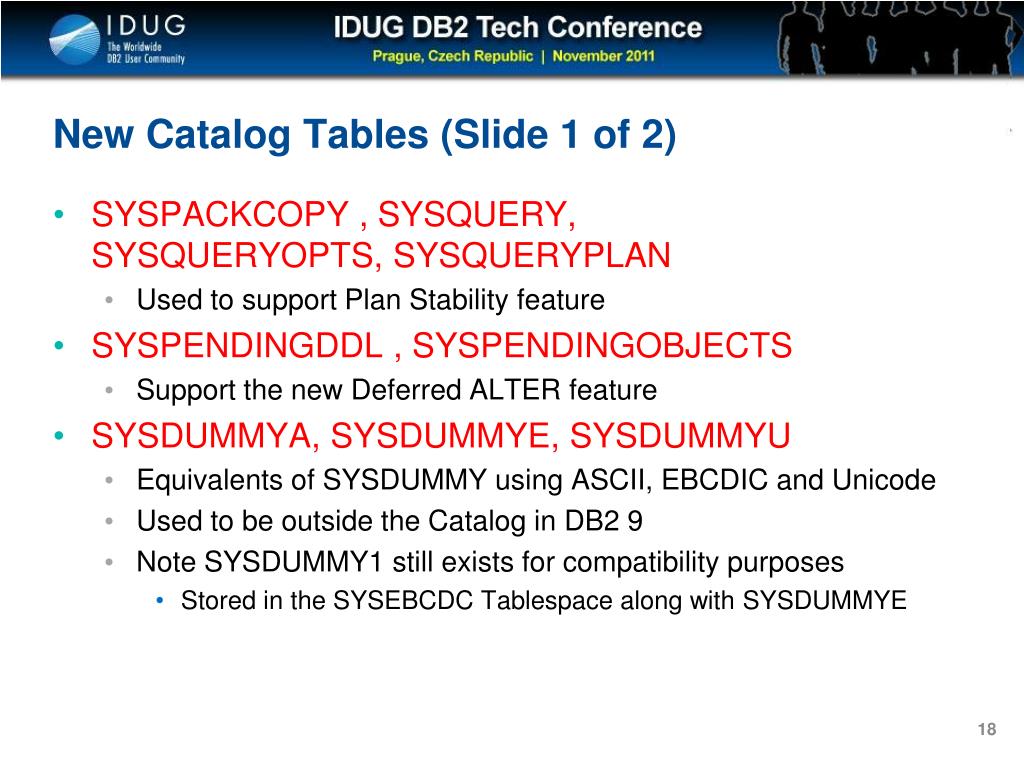
PPT A new Catalog and Directory Structure in DB2 for z/OS PowerPoint

DB2 Catalog浅析&学习笔记 怎么著都不成 博客园

PPT Chapter 12 Database Managers on z/OS PowerPoint Presentation

DB2 Catalog Tables List Srinimf
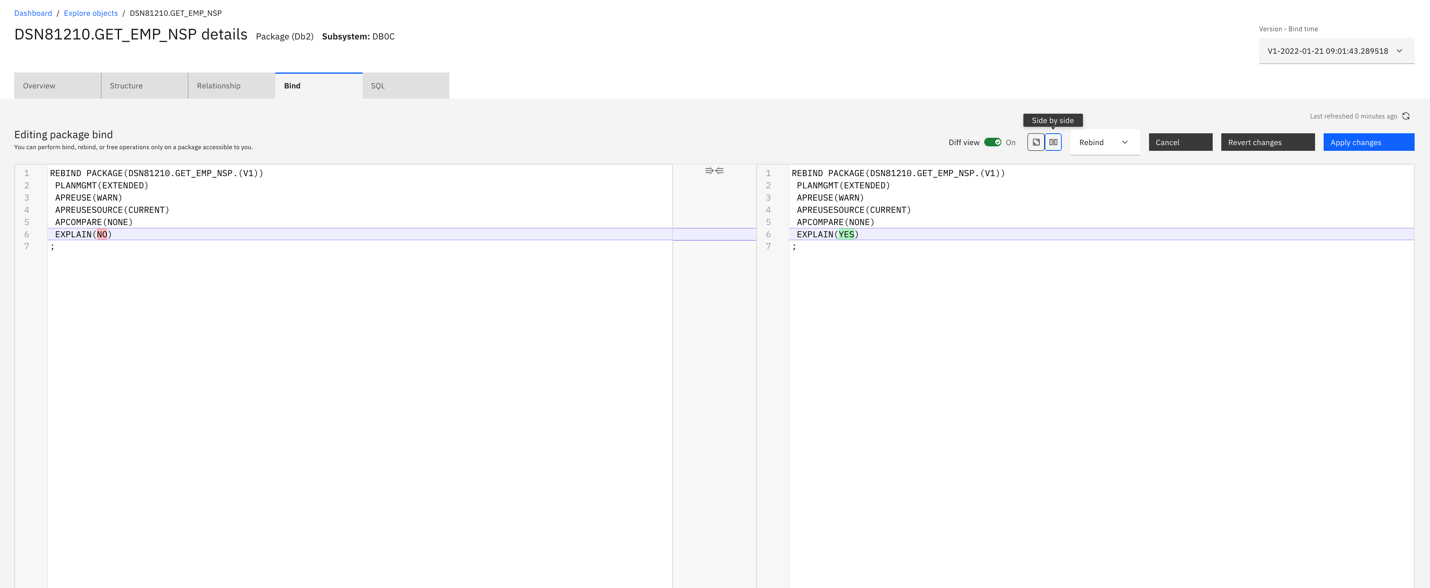
Exploring the Db2 for z/OS Catalog International Db2 Users Group
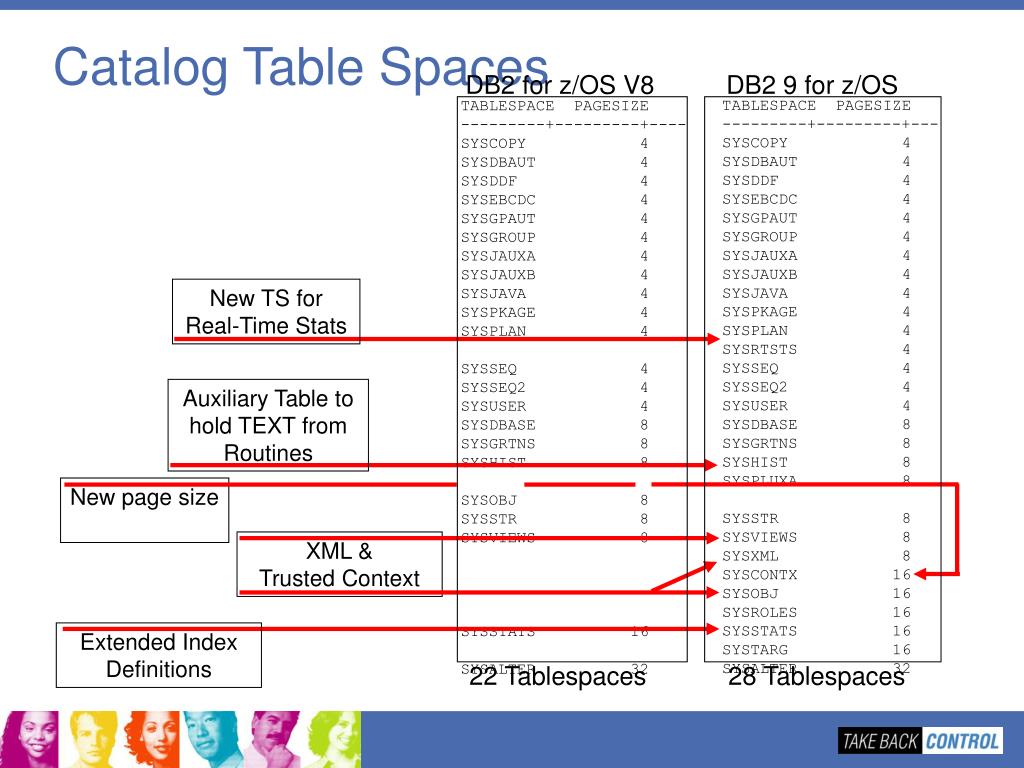
PPT DB2 9 for z/OS Planning and Experiences PowerPoint Presentation
(Db2)Catalog database partition numberがマイナス1になる意味 インフラ系SEの技術メモ

CATALOG MANAGER for DB2 Understanding list processing YouTube

Exploring the Db2 for z/OS Catalog International Db2 Users Group
CATALOG MANAGER for DB2 how to create and use Utility Profiles

IBM i, AS400 Tutorial, iSeries, System i List all source member in

DB2 LIST TABLES Prerequisite, Syntax & Example of DB2 LIST TABLES
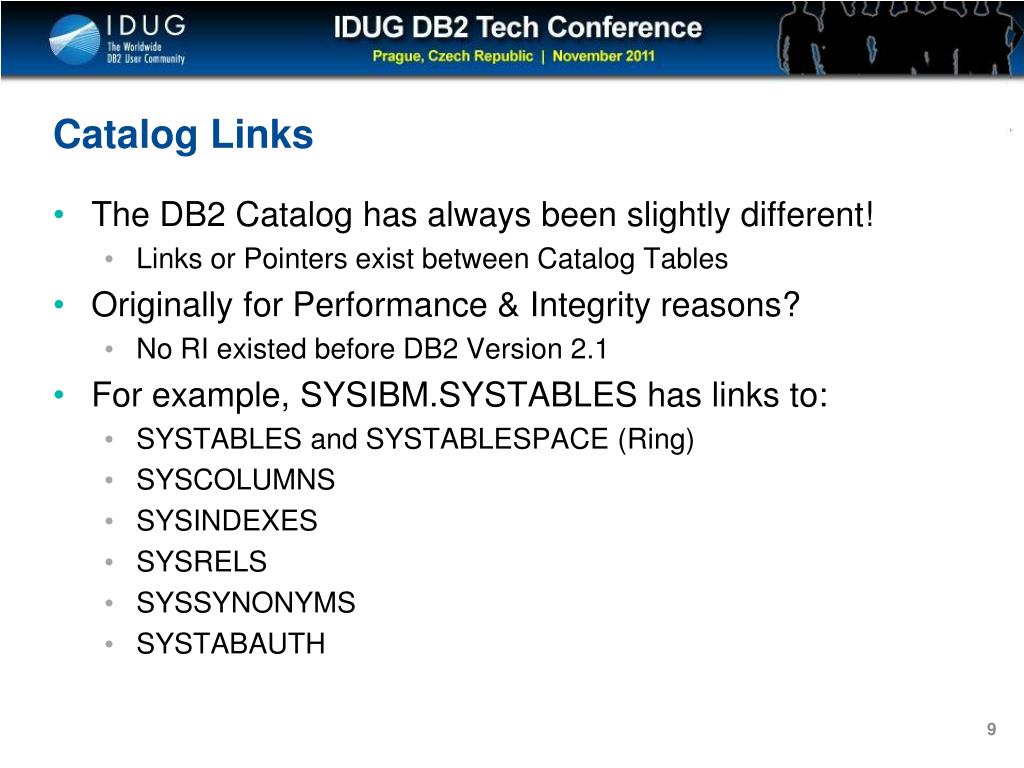
PPT A new Catalog and Directory Structure in DB2 for z/OS PowerPoint
Display Utility History using Catalog Manager for Db2 Knowledge

PPT A new Catalog and Directory Structure in DB2 for z/OS PowerPoint
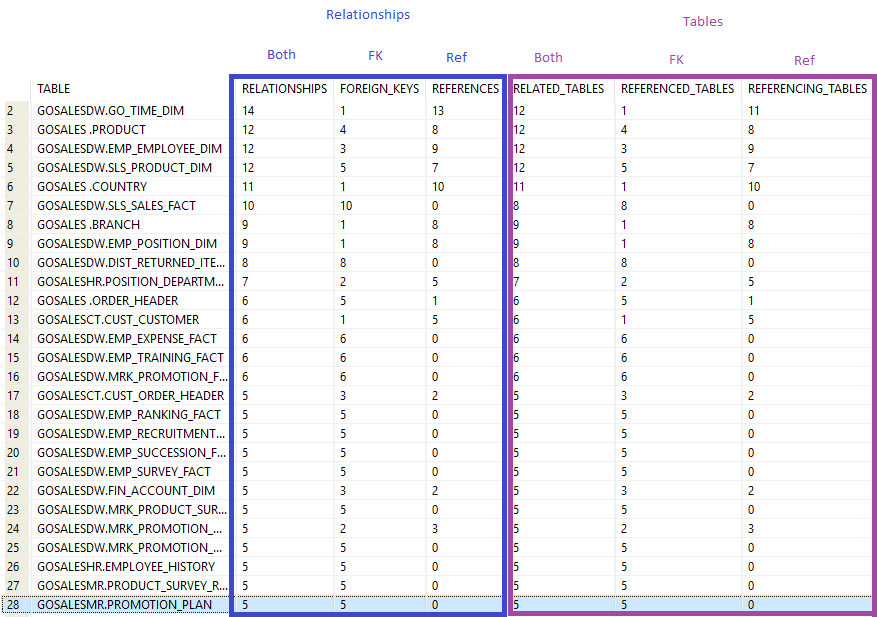
List tables with most relationships in Db2 database IBM Db2 Query Toolbox

List IBM DB2 Commands Cody Burleson
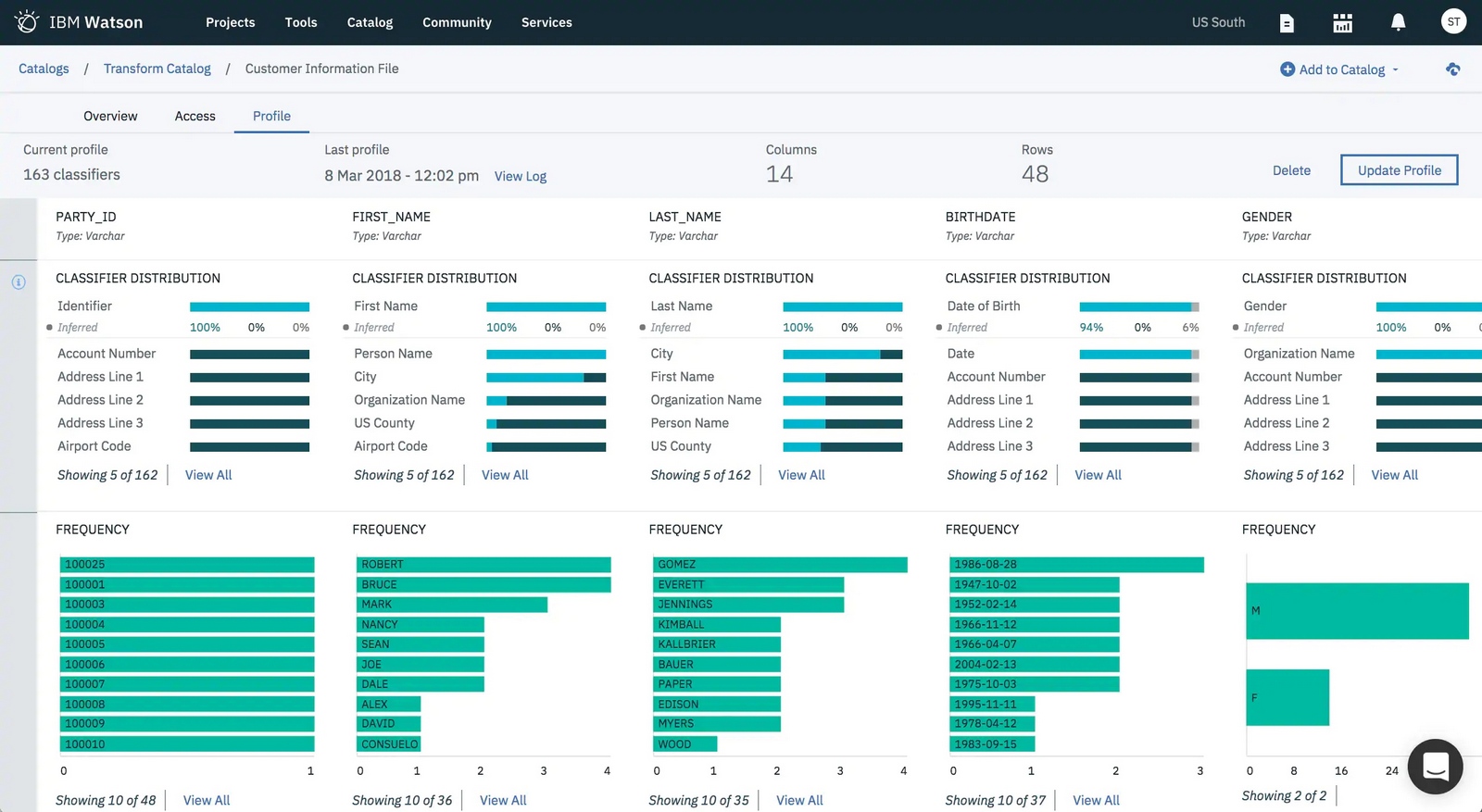
20 Data catalog tools for IBM DB2 DBMS Tools
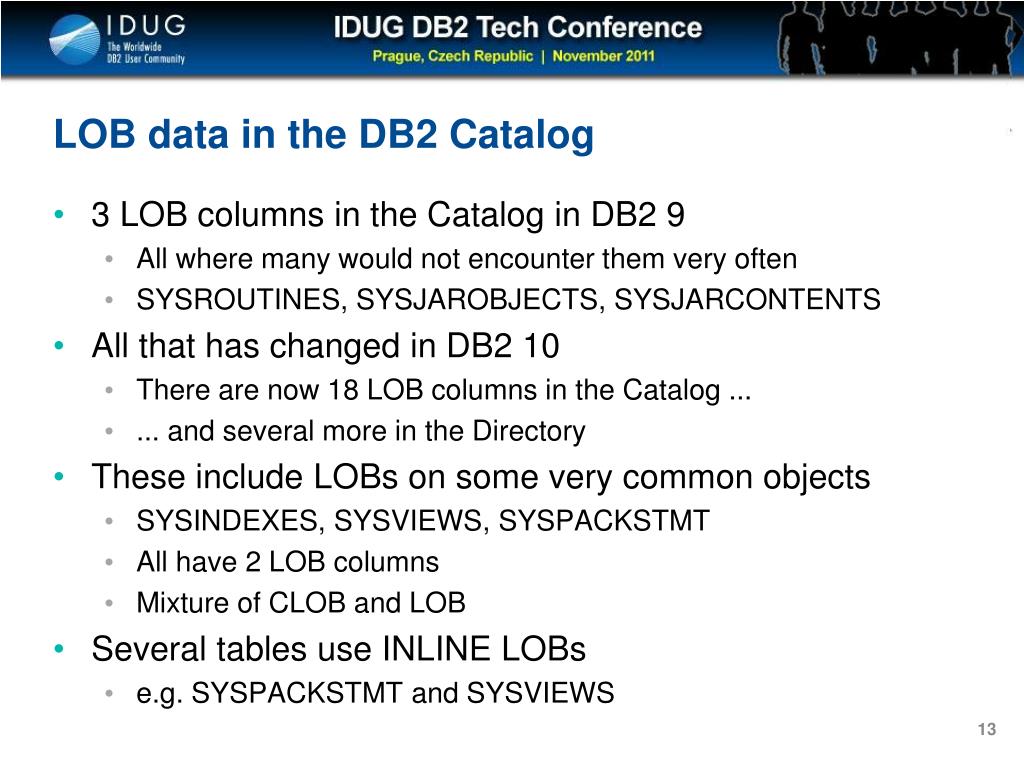
PPT A new Catalog and Directory Structure in DB2 for z/OS PowerPoint

How to list all existing DB2 Databases DB2 (LUW) Administrative
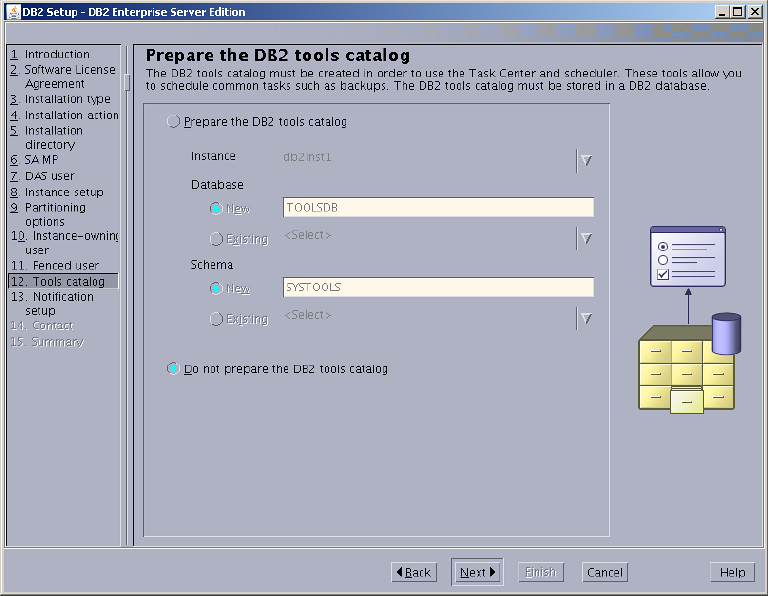
Creating and Configuring an IBM DB2 Database

16 Data lineage tools for IBM DB2 DBMS Tools

Exploring the Db2 for z/OS Catalog International Db2 Users Group

List DB2 Database Directory
CATALOG MANAGER for DB2 how to create and use Utility Profiles

Get current session library list from DB2 catalog YouTube
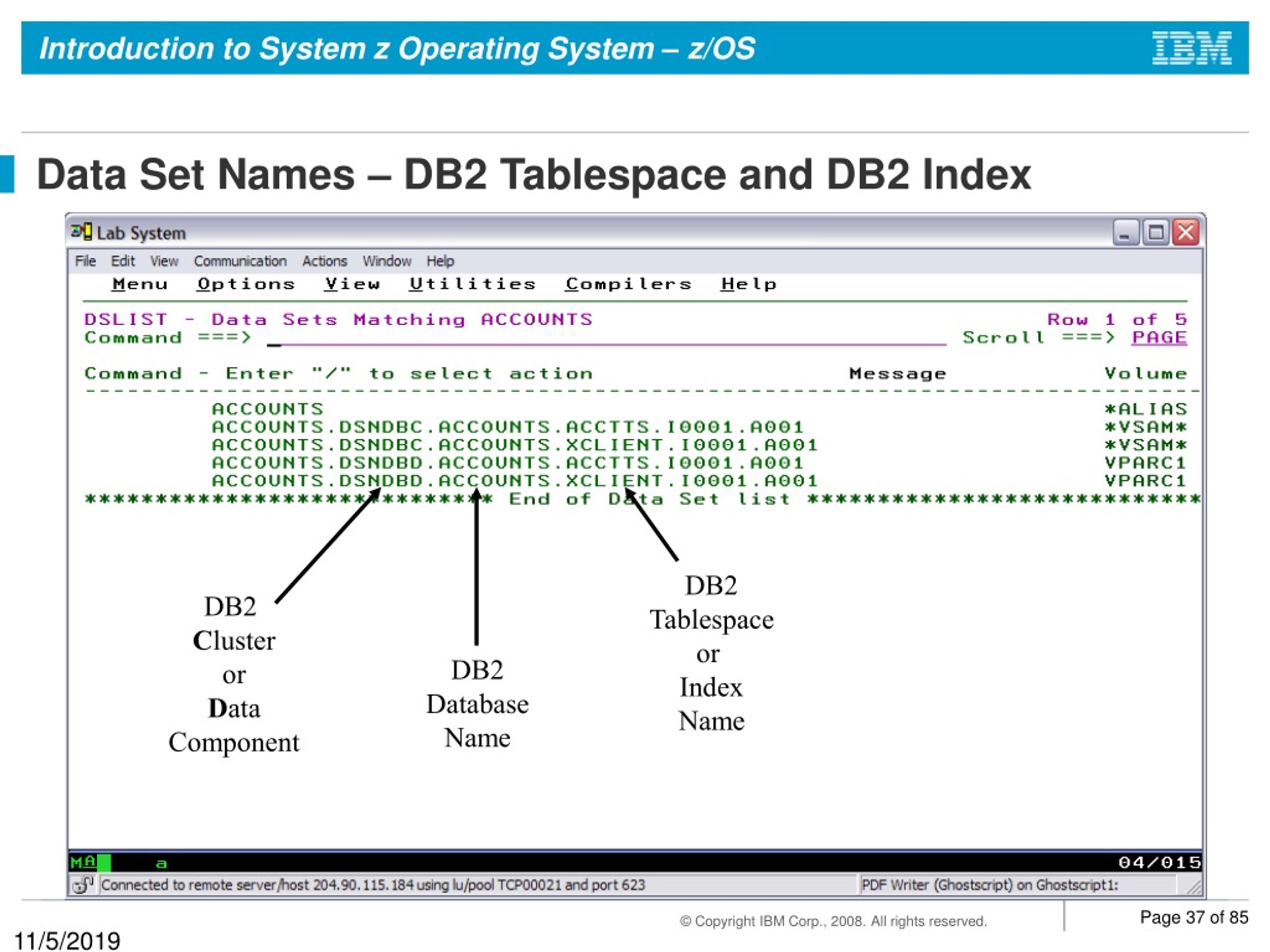
PPT z/OS Data Sets, Disk VTOC, PowerPoint Presentation, free download
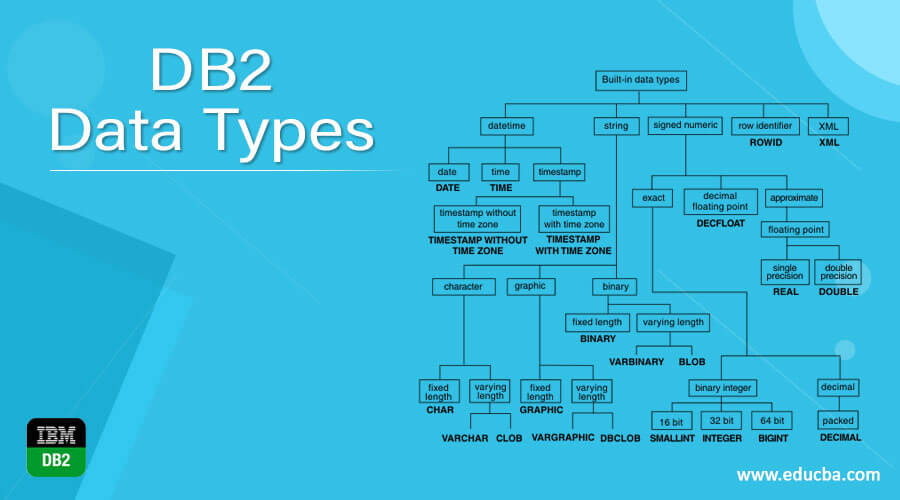
DB2 Data Types Complete Guide to DB2 Data Types
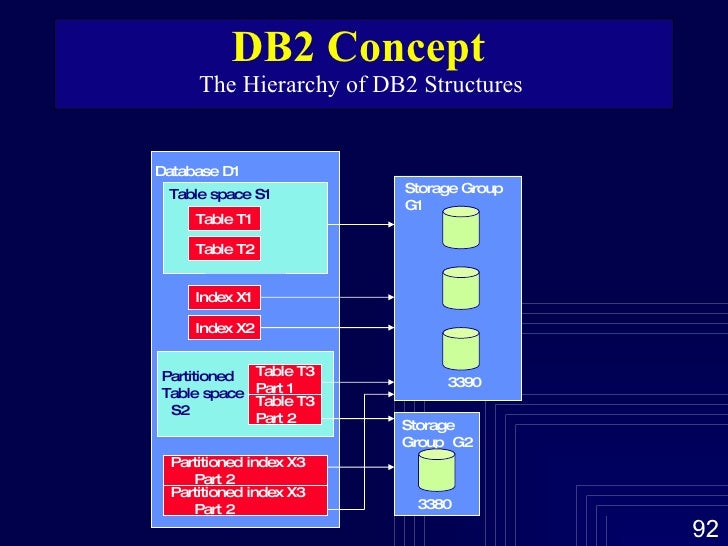
Db2
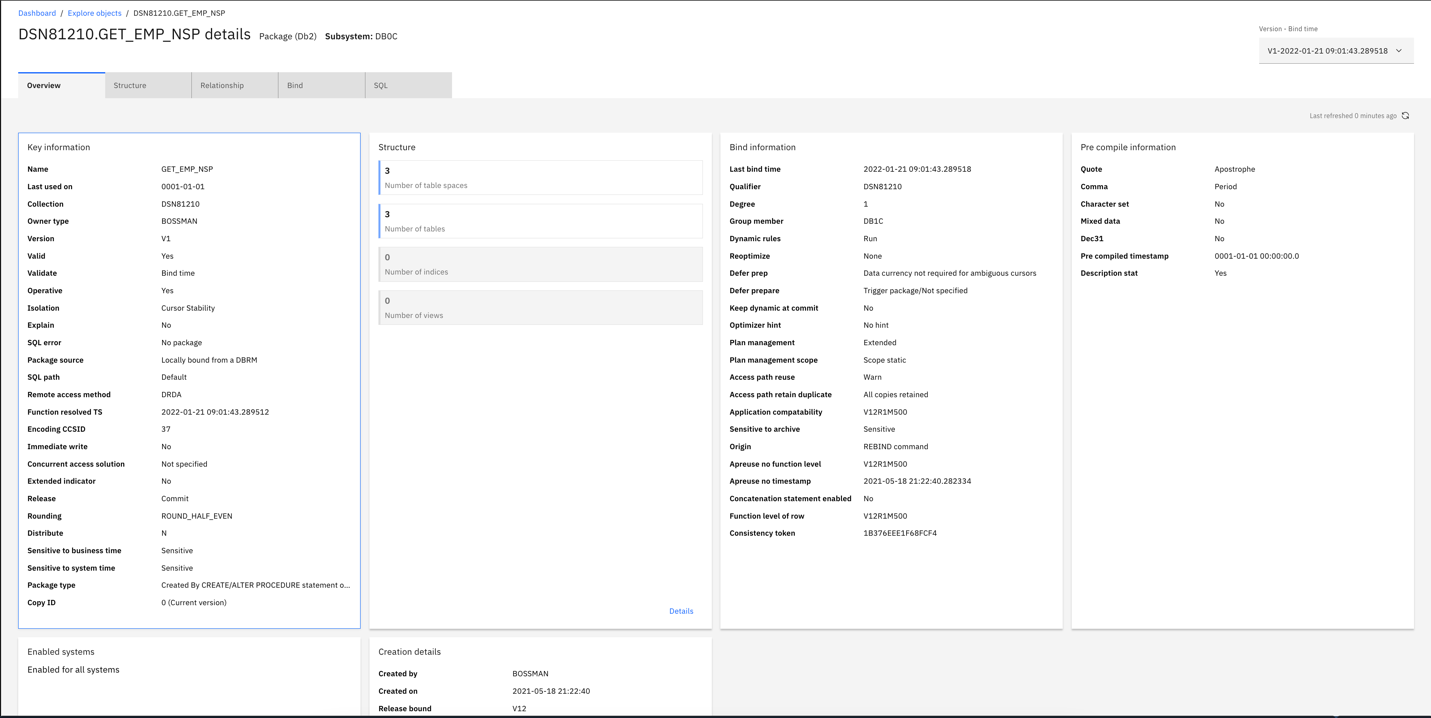
Exploring the Db2 for z/OS Catalog International Db2 Users Group
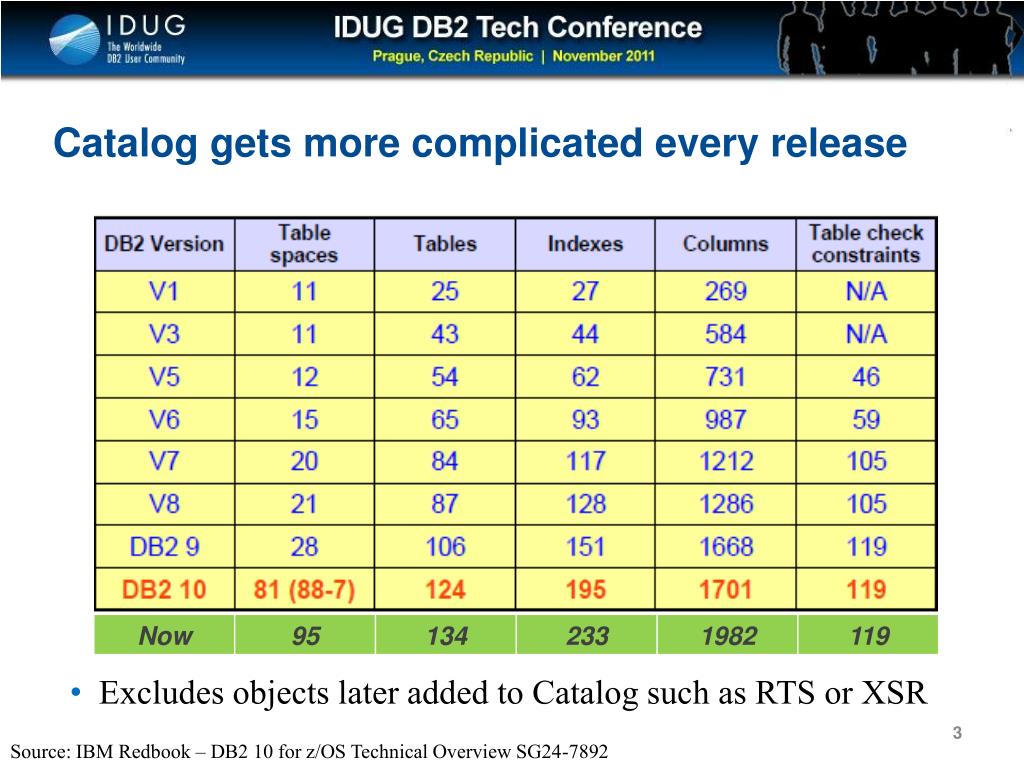
PPT A new Catalog and Directory Structure in DB2 for z/OS PowerPoint
BMC AMI Catalog Manager for Db2 Getting current row counts for table
Related Post: